Friday, April 10, 2026

Baldwin Gas Mechanical

 Baldwin Gas Mechanical Locomotive

New, to me, this gas-mechanical loco in 16mm scale. I first saw the model on my late friend Ken's layout a couple of years ago. Produced by AnDell, the locomotive ran superbly and with all those rods flapping around, looked great. 

I wanted one, but AnDell are long since gone, so my only chance was second-hand, but nothing appeared. 

Sadly, Ken passed away, but I know those disposing (that sounds terrible, even though it is the correct term) of his railway and collection. We agreed a sensible price for the model, and last week, I finally picked it up. 

You might wonder why there is a Little Phil on the footplate. Well, when I first saw the model, it looked odd without a driver. There's always a model of me in my bag, so I tried it on the footplate - a perfect fit. So, for Christmas, I gave Ken a driver for his loco, suitably painted into overalls. 

Battery-powered, from cells within the bonnet, the wheels are driven by a conventional gear. However, the rods and jackshaft drive are purely for show, a Delrin chain linking everything up. No wonder the model runs so smoothly!


Control uses an AnDell radio set which works perfectly. I assume, from the short length of the aerial, that it's a 2.4 system. No xtals are visible, which is a relief. The loco is a delight to drive. Only problem is, it's 32mm gauge only, and I don't have a track for this easily available. Never mind, this is a nice reminder of a friend, and I'm sure I'll find somewhere for it to streatch its legs.  

Thursday, April 09, 2026

Garden Rail May 2026

Garden Rail May 2026

We head down to the allotment for some fast vegetable action as Tom Taylor's once modest railway has grown to become a popular attraction with regular open days. 

On the workbench: 

  • Ice cream barrow build 
  • Instant elevated railway 
  • Spring garden tasks 
  • Darjeeling Class One locomotive kit

If you fancy a small RTR battery-powered locomotive, we test Woodleigh Engineering's 'Igor'. 

For vintage steam fans, there is a good look at Finescale Engineering's Hunslets. 

And don't miss our essential guide to April's National Garden Railway Show – the UK's biggest event for modellers in larger scales!

Wednesday, April 08, 2026

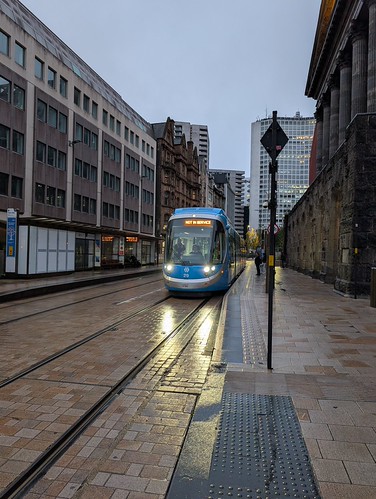
Pan down trams

Birmingham tram

The trickiest part of any tramway model is the overhead. Unless you model a very specific location, such as Wolverhampton with its stud contact, or London with the slots and skate, overhead wires are very much part of the scene. 

From Birmingham, we have another option, at least for modern image modellers. Part of the route in the city requires the trams to operate from batteries, as there isn't any overhead. The thinking was that the line runs through some historic buildings, and no one fancies screwing overhead cables to these, so for a short section, the trams drop their pans, and run on batteries.  

Tuesday, April 07, 2026

Buffers and couplings


Slightly fiddlier big bits this time. A certain carpet-dwelling YouTuber would be delighted to find the buffer are sprung. But you do have to assemble them. 

Here, I found a little work with reamers was needed to ensure the plastic buffer head and shank slid freely in the casings. Nothing more than a couple of twists, but worth it as they won't "wear in" in operation.  Not unless you push the things endlessly anyway, and that's not my idea of a hobby. 

Even with the other collar on the end of the casing, the shaft and spring will go in from the front, being retained by a metal nut on the back. I added a little superglue to this once assembled,  we don't want it unscrewing itself and falling on the track, never to be recovered. 

Coupling hooks just slide through the headstock, the spring goes on the back, and is retained by the split pin. This slides easy though, and is a little bit fiddly to open up so it stays in place. A two-plier job. 

Monday, April 06, 2026

Underframe bits


This is the fun bit. Plenty of big, chunky parts, all of which go together really well. 

Everything was given a coat of Revell 9 the evening before, so it was all nice and dry before I broke the glue out. 

The W-irons have a lump on them, that locates into a hole in the back of the solebar. No messing around, lining things up. They are solid, but having fought Parkside 7mm kit moving (if you keep the glue out of them) axleboxes, I don't have an issue with that. There are some slippery plastic bearings to fit in the back first, which are a tight fit, but I added a little brush-on superglue to be on the safe side.  

A piece of wire is provided for the cross shaft, but it seemed a little anaemic to me, so I replaced it with 0.9mm brass. That might also be a bit thin, but I've never measured one of these parts. A job for another day. Replacing the wire was in no way informed by me losing the supplied length either...

I did have to use a small broach to open out the holes in the V-hangers a touch, but there's plenty of meat for this. 

An hour saw the whole job done, and I wasn't rushing. I need to touch up a few bits of the paint, but the wheels rotate freely, and the wagon sits flat, so I am happy.