Showing posts with label Australia Trip. Show all posts

Saturday, February 20, 2021

Saturday Film Club: Jumbo Railcar


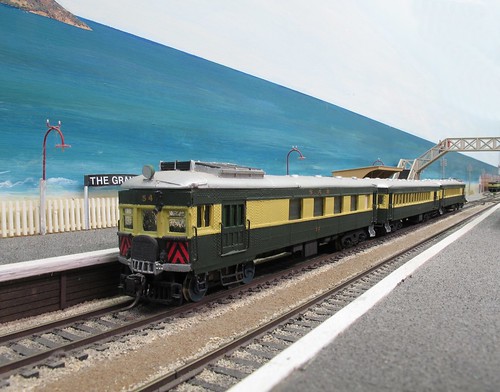
Spotting this video of the Australian diesel hydraulic 2000/2100 class railcars running from Adelaide to Gawler - and thought "I've done that trip". 

Looking through my Australia photos, I found a couple of shots of these interesting looking vehicles. What I can't remember is if I travelled on them. More head scratching required.

Urban train


Wednesday, March 25, 2020

Waterborne Wednesday: Not the galleon

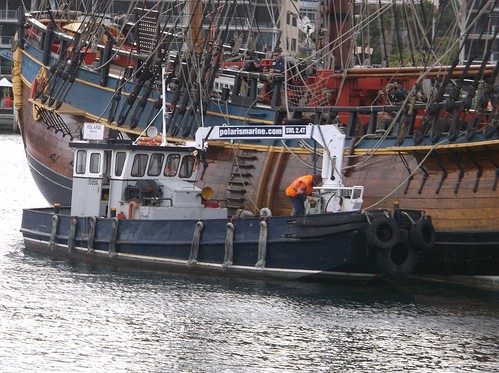
Polaris

Sensible people would take photos of the pretty, wooden galleon moored in the Sydney harbour. 

Not me, the working boat next to it is far more appealing. I've not desire to build a many-masted sailing ship, but I could see myself recreating the workboat. 

For anyone who fancies a go, all the details can be found on the company website (PDF). The dangers is, they have several other vessels on there that would also make nice models!

Wednesday, November 13, 2019

Waterborne Wednesday: Sydney Ferry

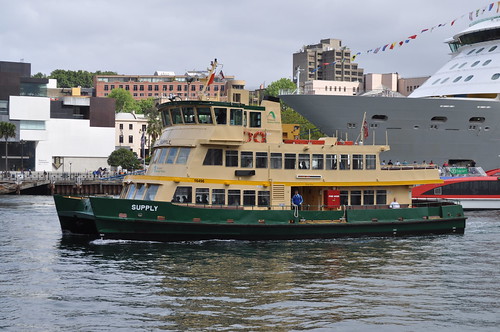
Supply

My subject this week is Michael Portillo's fault. Watching his latest series of railway journeys through Australia, I caught the Sydney one and he ends up at Circular Quay. That's where I stayed a few years ago on my trip and while there, made much use of the local ferries. 

These catamaran boats zip in and out of the various quaysides all day and fascinated me. The locals treat them as buses and this translates into some very slick sailing. Boats nose into a berth and then back out again just as fast to head to the next stop. 

In my pile of souvenirs is a card kit to build this boat - something firmly on the "one-day" pile. I'd love to build a larger RC version too, although there is a lot of detail to add to bring it alive and the tricky hull to build...

Wednesday, October 19, 2016

Warehouse Wednesday: Aussie navy buildings

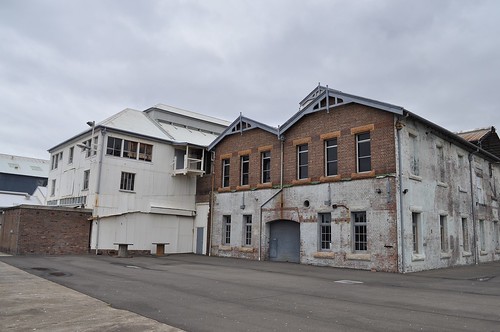
Cockatoo Island buildings - brick

Two years ago, I was enjoying a trip to Australia. Being a bit odd, I skipped the beaches and traditional stuff, finding my way to Cockatoo Island.

Despite the name, the island isn't a rural paradise, it's an ex-Navy dockyard. Found in Sydney Harbour, it's easily reached by ferry and once there, makes a fascinating days exploration for those who like industrial architecture. 

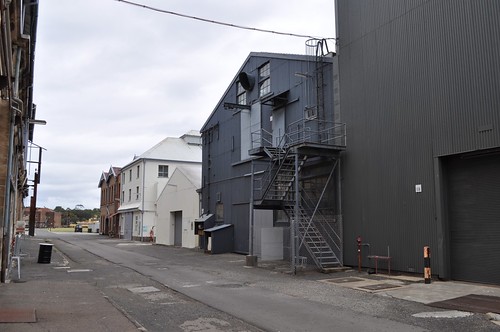
Most of the buildings are still intact, some in limited use. There are numerous large cranes dotted around and lots of rust. It's fantastic. 

Looking back at my photos, I really must put together a proper album, for the minute, you'll have to make do with these two and a trip to the website.

Cockatoo Island buildings - metal

Friday, July 01, 2016

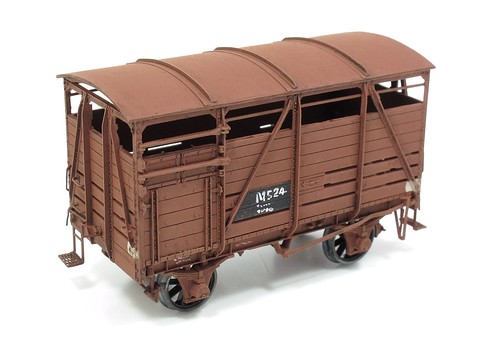
M wagon finished

Victorian Railways M Wagon

After adding thebrake lever and guide - a couple of ingenous fold-up etched brass components - I could move on to painting. 

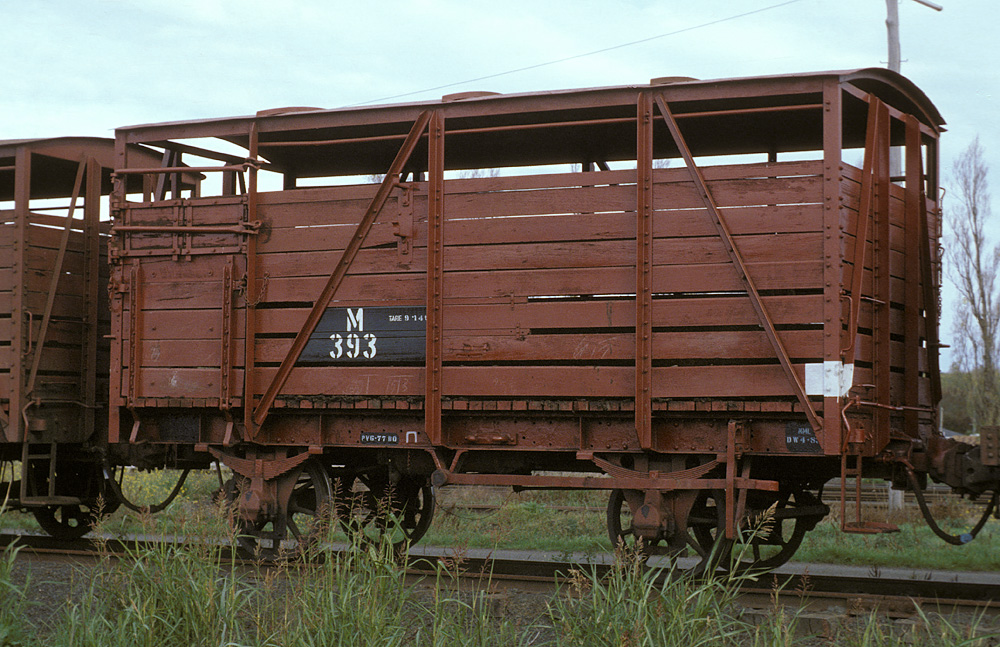
Livery appears to be rust brown so a quick spray with Humbrol 70 did the job. The white patches indicate the side the brake lever is on, there is only one, and of course there is the black patch for the numbers. 

Ideally I'd have used transfers for digits but as I'm only doing one wagon, I'm not going to spend money on a set. As it is, the on the prototype the numbers are applied using a stencil so I tried to copy this with a mapping pen and some ink. It's not perfect but will be fine for now. 

Weathering is just a wash of Games Workshop Earth shade ink to excentuate the detail. Left for a few minutes and then wiped away it gives the dusty appearance of the prototype to my eyes. 

This is a cracking kit. Lovely crisp mouldings with the added etched parts to improve things futher. I could imagine a small layout with a train of these things looking smashing. Not for now though...

Monday, June 27, 2016

M wagon

A bit more in the way of Aussie projects this week. Tucked away in a box of souvenirs, is a Steam Era Models Victorian Railways 'M' Wagon.
The kit is a modern multi-media production. Most of the parts are very well moulded plastic, with crisp detail. There's also some wire and a small fret of etched details. 


To be honest,I know nothing of the prototype. The kit was bought in a model shop visited in Victor Harbour, the first of many during the trip. I picked it because I liked the quality of the mouldings and the finished model on the packet was suitable "Aussie". 


To be honest, I can't do any better than point you at than this excellent web page over at victorianrailways.net so for more details, head over there.In the meantime, I'll start with the chassis.

Thursday, June 11, 2015

London Road

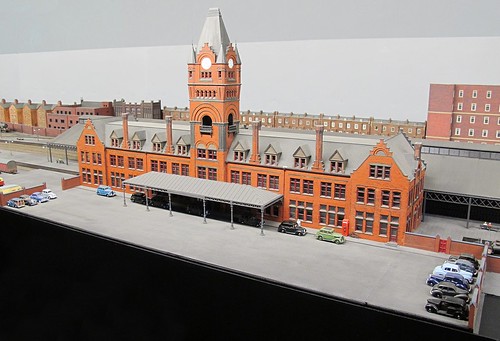
It must be Aussie layouts month in the UK model railway press this month. I open up my copy of Hornby Magazine and there is Alan Harrison's London Road, photographed by my host for the Adelaide section of my trip, Andrew Emmett.

London Road

The layout lives in a purpose built railway room and when I visited, as part of the BRMA conference, there were quite a few of us in there. Space for a tripod was a bit limited so only the top one of these shots is focus-stacked. Both can be clicked on for a larger view though.

London Road Station Building

My favourite feature was the station building which despite being a Walthers American plastic kit, fits the location perfectly with its Gothic architecture. You'd be hard put to scratchbuild anything more appropriate.

Tuesday, June 09, 2015

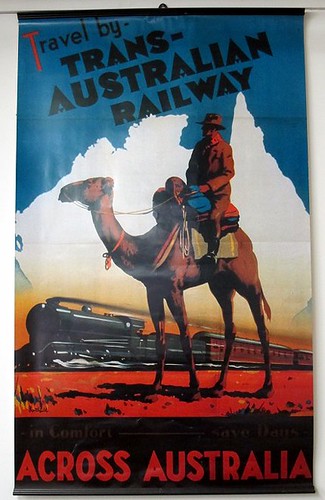
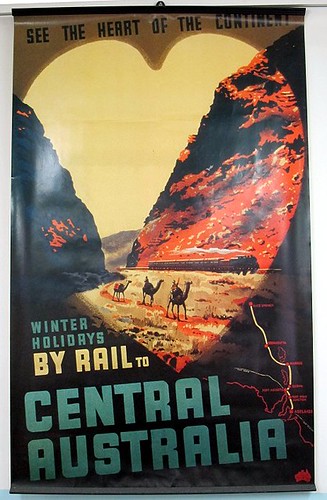
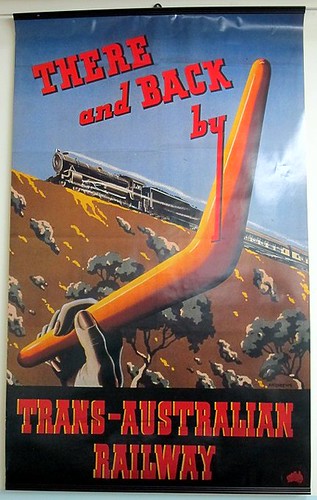
Aussie railway posters

While looking for the photos used in yesterdays, post, I found some more shots, this time of Australian railway posters hung on Trevor's railway room wall. I thought they looked fantastic at the time - you can almost feel the heat from the lands they advertise.

Trans-Australia Railway poster

I'm assuming the camel partly refers to the Ghan, a traditional camel train that was the only way of crossing the desserts before the train arrived.

Central Australia Railway poster

Is there much to see in the middle of Australia? Surely it's mining towns and creepy crawlies that can kill you?

Trans-Australia Railway boomerang poster

A boomerang, we really are in a land down under.

Monday, June 08, 2015

Huntingdale and Grange

I don't normally buy Continental Modeller magazine - I'll flick through it in Smiths most months to see if there is any inspirational On30 stuff, but most of the time it stays on the shelf.

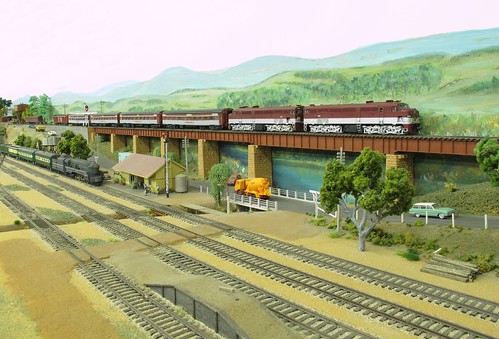
Diesel on viaduct

This month, I received an e-mail from Andrew Emmett to alert me to the first part of an article on Kevin Kavanagh's model, Huntingdale and Grange appearing in the pages.

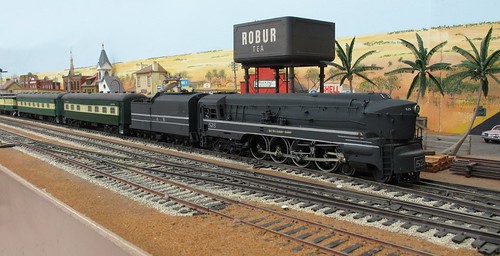
When I visited Aus last year, this was the first true, native layout I was taken to see - and what an introduction it was! The room is huge and the layout runs all around the sides with a spur in the middle. We just don't do this sort of thing in the UK.

484

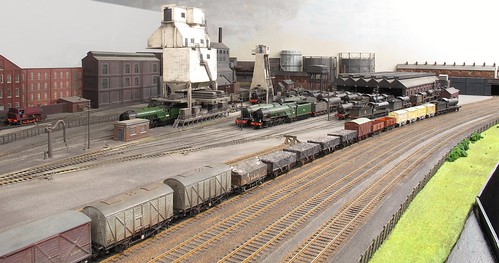
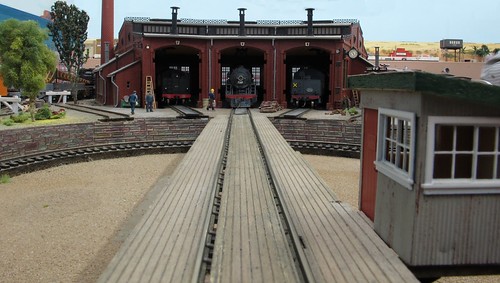
Anyway, seeing the model in the magazine reminded me of those warm but fascinating days last year and I decided to dig out some of the photos I took. The 4 here all required focus stacking to keep everything sharp, so large are the scene. I've finally processed them all and present them here. You can click on each for a larger view.

Railcar in station

What I can't be responsible for is UK modellers deciding to up-sticks and move "down-under" for extra space...

Turntable

Sunday, November 23, 2014

NRM - Australia

NRM Sign

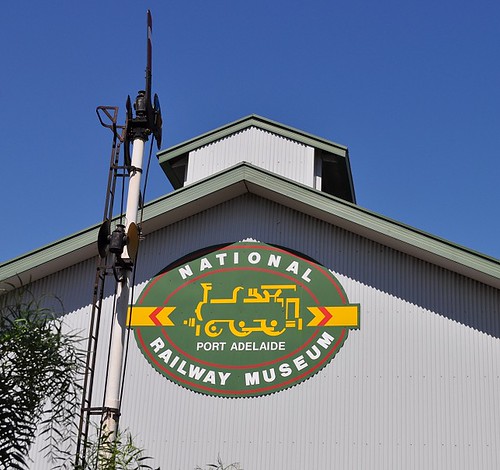
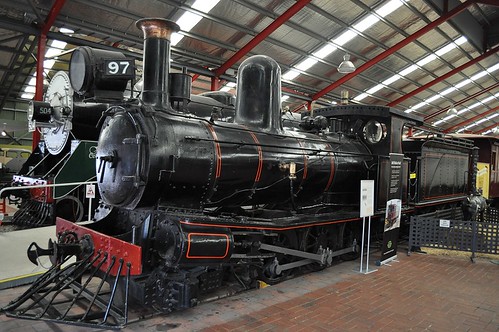
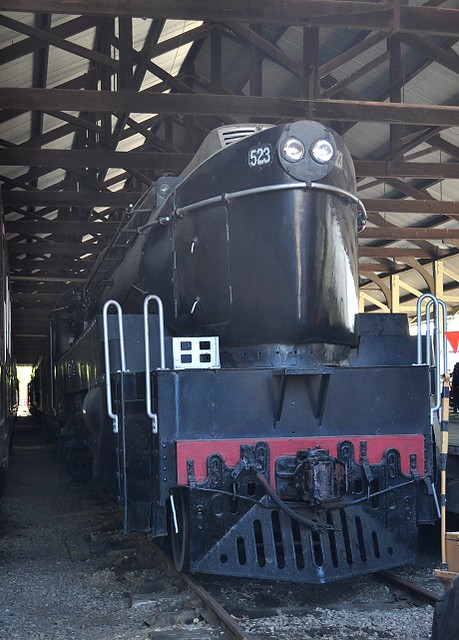
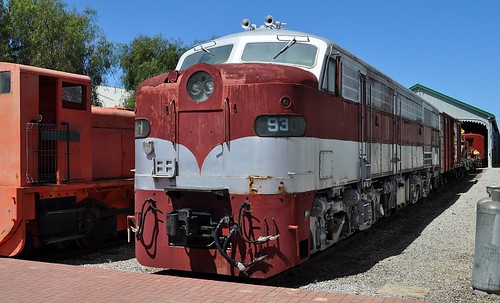
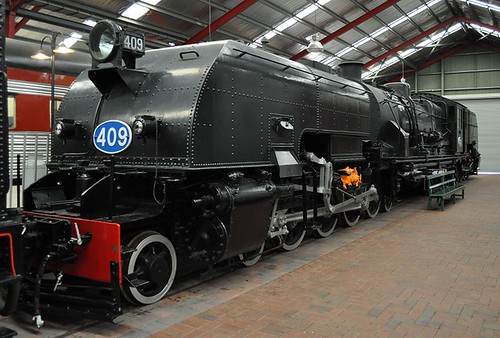
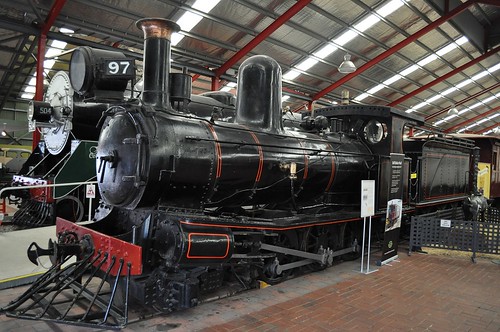
While I was in Oz, one of the trips I was taken on was to their National Railway Museum in Adelaide. It's a fantastic place, not unlike our own NRM in blighty albeit a bit smaller.

The slight snag is that while I can present you with photos of all sorts of train-related things, I didn't pick up enough information to be able to properly identify the different classes of loco.

97

This didn't stop me snapping all sorts of very modellable things of course.

523

Even the diesels appealed.

930

And of course there was a Garratt.

Garratt front

So instead of me writing stuff, why not head over to Flickr to look at my photos. After this, take a trip to the very comprehensive National Railway Museum, Port Adelaide website.

Friday, November 07, 2014

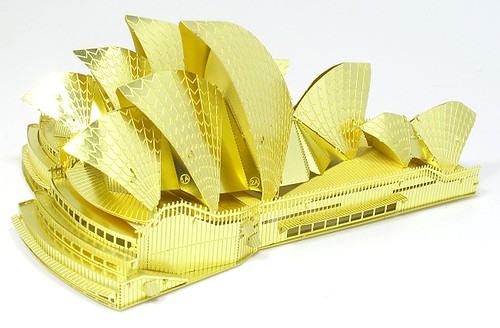
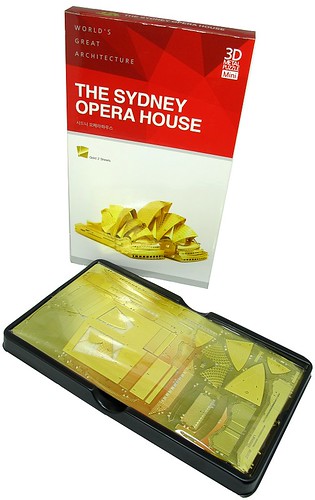
Sydney Opera House - in brass

Opera House in brass

You'd think a kit designed for "normal" people would be easy to assemble. Instead, I've built locomotives that were easier to put together than this!

Part of the problem is that to make things "easy", the kit used tabs and slots to locate the parts. You push one through the other and then bend it over to lock the two bits together. There are many places where I'd love to have run a bead of solder but the metals coating would prevent this. Since the end result needed to be unpainted, stripping this off wasn't really an option. Besides, I was supposed to be building this for fun, not a serious project.


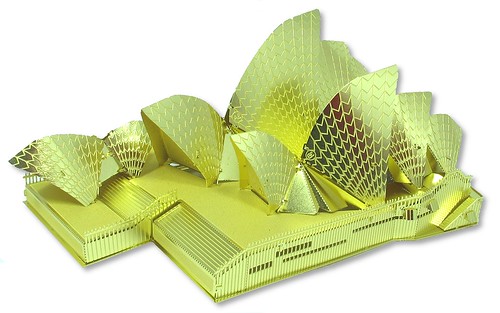
Opera House in brass - rear view
 
Even if you are a normal person, you'll need some small pliers with tiny noses to put this thing together. You'll also need a Stanley knife or similar to cut the bits free from the fret - something the instructions don't mention.
 
The design of the building doesn't help much. It's all curves and angles. If a wall isn't curved, it zig-zags in and out and this doesn't always come over in the instructions. All bend lines are etched as dotted lines rather than the kit convention of half etching, a pity as this would have provided an indication which way the bend was supposed to go. In my experience you get to change this three times before the metal snaps...
 
Anyway, after around 3 hours fiddly work, I have the start of an Australia corner in my display cabinet. At 13 x 8 cm, it's a nice size (no, I don't know what scale it is) and I have the satisfaction of having made it myself.

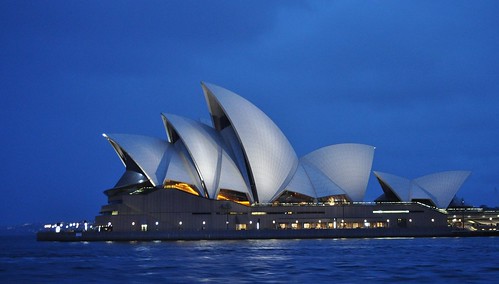
Opera House at dusk

Thursday, November 06, 2014

Sydney Opera House - in kit form

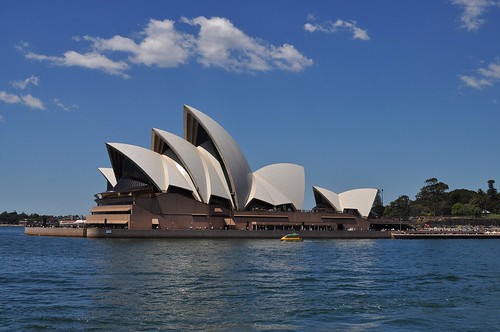
Opera house from the ferry

If you visit Sydney then it's pretty much the law that you will go and have a look at the opera house. We're all seen it on the telly and so the chance to have a look at the real thing isn't something to be passed up.

I took my look on the first full day in the city. As expected, the building looks amazing although not as big as you'd think it is. A tour of the inside is interesting. Those shells are undecorated concrete inside and covered with shiny, self-cleaning, tiles outside. A fascinating structure.

Opera House KitNow, if you have an iconic building then the other certainty is that every souvenir seller will be peddling miniature versions. From tiny resin keyring sized models to whoppers in the Lego range that would have required me to empty the suitcase to ship home, there is something for everyone.

Including me it seems.

Much as I'd enjoy the Lego versions, my hobby involves an awful lot of etched brass construction and so when I found a metal opera house kit in a model shop, I knew it had my name on it.

Not described as a "kit", this is marketed as a 3D puzzle. In the box are two nicely etched sheets of brass. The metal has a strange surface so presumably it's been lacquered to keep shiny. Two colours are available - silver or gold. The later seemed to be selling less well so that's what I plumped for.

Price is around £15, not too bad as a souvenir and certainly lightly enough and packed to survive a flight home. What the security people thought when they X-rayed it is not known...

Wednesday, November 05, 2014

Not so different after all

Aussie Steam Engine

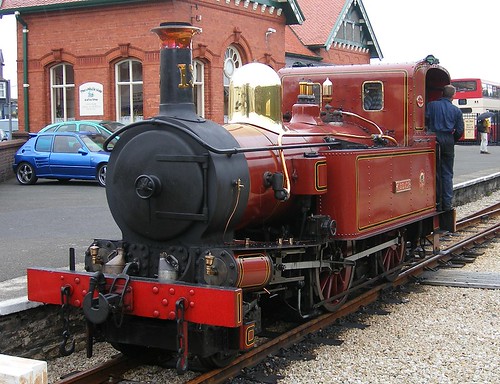
The traditional British view is that foreign railways should be ignored and only the home-grown scene is of interest. I'll admit to preferring UK prototypes myself, but as these photos show, it's not as simple as this.

Take a look at the top photo. An Australian 3ft gauge prototype built by Beyer Peacock. Now look at this one:

Kissak
 
A 3ft gauge prototype, also built by Beyer Peacock. The front ends both show the "house style" or that the makers had a design that worked and weren't about to change it just because there were going to be more wheels and a tender behind the cylinders.
 
I wonder what would have happened if the Isle of Man had needed some tender engines...

Tuesday, November 04, 2014

Detailed scenes

 
Not all Aussie layouts are giant scene nailed in place. Master modeller, Gavin Thrum, builds what we would consider "conventional" exhibition layouts. On to these he lavishes high levels of detail.

 
As a bit of a detail freak myself, I loved this work and could have snapped many more shots. As it is, I present four examples. Hopefully there will be more appearing in print in the not too distant future.

 
All this is impressive, especially when you consider that Gavin is one of the very few pure-bred Aussies I met while away. Not only that, he's never been to Britain so all this is from photographs!

Monday, November 03, 2014

Aussie layouts

One of the biggest differences between the Australian model railway scene and the UK one is the lack of exhibitions. With major population centres being hundred, if not thousands of miles apart, any exhibitions would be very localised with little chance of bringing layouts in from outside the immediate area.


Down under, they also enjoy much more space outside the city centres than we do. Bungalows on plots larger than most UK executive houses occupy are the most common suburban accommodation. These allow for proper sized train shed often twice the size of our double garages.


All this meant I saw many very large layouts that were permanent installations. Each featured several stations and the system was operated far more like the prototype than the theatre presentations we tend to do for exhibition display. Trains are passed between operators and dealt with in a prototypical manner.


Rather than bring the layout to the operators, the operator travel around the layouts. Each weekly meeting takes place at a different venue with the team enjoying a running session + stubbies. If there are 5 in the team, that allows everyones layout to be worked once a month, allowing plenty of time for subsequent repairs and tweaks before they descend again.
 
Some of the layouts are vast empires. Even the more modest ones would be considered large by UK standards. You don't see many UK models where a Garratt can earn its keep in the way the real thing did!

Friday, October 31, 2014

More souvenirs

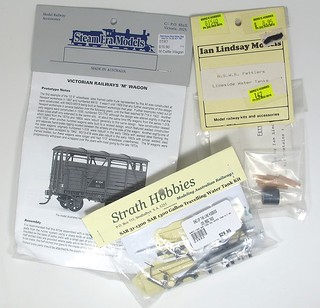
Oz KitsWell, I couldn't visit all those model shops in Oz without buying a few kits could I?

The range of Australian prototype kits is greater than I had expected. Maybe visiting modellers interested in UK railways influenced me, but I'd expected this to be the realm of scratchbuilders whittling things out of gum trees.

Not so. There is a modest amount of RTR and quite a supply of kits. Not anything like as much as on the UK scene, and diluted because of the countries 3 different track gauges, but still enough to make a reasonable start on a layout.

Limitations on the amount of baggage I could bring back on the 'plane restricted my buying but I have a few bits to dabble with.

Top of the tree is the Steam Era Models kit for a Victorian Railways "M" wagon. Sharply injection moulded, the kit includes wheels and some etched details. Price $16.90Aus, or about 9 quid in her Britannic Majesties coinage. A real bargain in many ways and slightly cheaper than a comparable Parkside kit.

Next is a Strath Hobbies SAR 31-1300 Travelling Water Tank. Injection moulded solebars, metal wheels and a resin body and some plastic strip. Obviously more of a cottage industry kit than the one above but I've seen a finished model and it looks OK. Price $29.95Aus - not dissimilar to a UK kit from the same sort of firm.

Finally, as the holiday drew to a close and I really was worrying about the suitcase, a couple of NSWR lineside water tanks from Ian Lindsay Models for $8.95Aus. Resin corrugated tanks and bits of wood. Nicely moulded and they will look great on a diorama one day. The Aussies collect water obsessively so you can't model the country without these.

In addition, there were some rather nice building kits, Korean brass (lovely Garratt for $1700Aus), brass and whitemetal kit locos and loads of other stuff. While the Aussie modeller might have to build more than his or her UK counterpart (no bad thing some may say), there's certainly a lot on the market.

Thursday, October 30, 2014

A couple of souvenirs


"What did you bring back from your holiday Phil?", I hear you ask.

Well, there is an awful lot of stuff the tempt the tourist but assuming you don't need a "genuine" Aboriginal boomerang or didgeridoo and prefer something railway related then the list becomes a lot shorter.

In my suitcase, a GWR 0-4-2 was to be found. Purchased for $20AUS from the convention second hand stall, this is a K's whitemetal kit still running on its original wheels. While the paintwork could do with a little touching up and a new smokebox dart is called for, the loco runs quite a bit better than the poorly Airfix GWR version I bought from eBay to operate Edgeworth.

I quite like the idea that I've imported a British model built by an Aussie. It's perfect reminder of the convention.

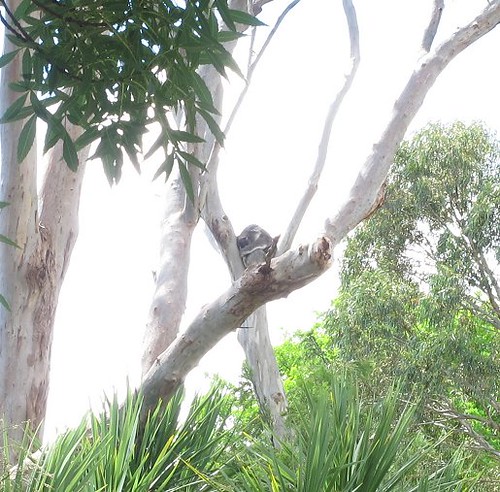
A plastic Koala might at first appear to have less of a model railway connection, but I spotted a wild one whilst photographing a model railway out in the wilds of Adelaide. Not something that happens in the UK!

Koala

Wednesday, October 29, 2014

Yard crane

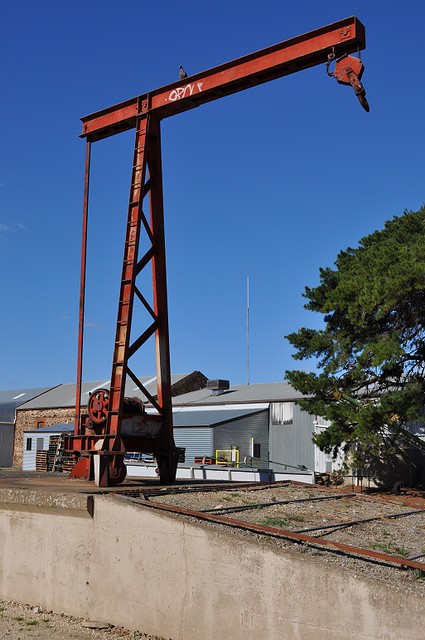
Yard Crane

Yard cranes in Australia, at least those on branch lines, seem to have two designs.

The first we can describe as "looking a lot like the Wills kit" and because of this can be ignored.

The other, and far more common version, is this tall example. For some reason, even though none appear to have seen any lifting action for many, many years, there are loads around. I reckon I saw at least 20 in my short time. Examples have survived even when the tracks they would have served have long since gone.

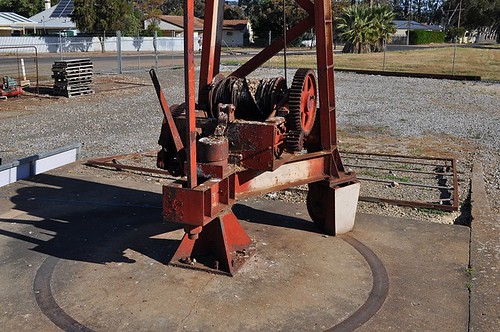
Yard Crane base

The design is ingenious. A central pivot point anchors the crane and the base rotates around this. Sadly I didn't get any measurements - long tape measures and long haul luggage allowances do not make good bedfellows - but I'm sure someone has a plan somewhere. Possibly even a kit.

Monday, October 27, 2014

Stobie Poles


It's funny what you become interested in on holiday. Or maybe it's just funny what I become interested in.
 
On the other side of the world from my home, the object that fascinates me more than anything else in the country is the Stobie Pole. Yes, poles supporting power lines. Something never seen on a postcard.
 
It seems that South Australia is short of straight trees suitable for making poles. Gum trees are wooden knots so not suitable for the job. If that wasn't enough of a problem, termites love wood so even if you have a straight length, it will be dinner pretty quickly.
 
The solution James Cyril Stobie came up with was to make a pole from two lengths of H-section steel filled in with concrete. Apparently alternative designs are regularly looked at but in nearly a hundred years, nothing superior has been found.
 
I pondered how I'd make a miniature version and thoughts of brass section filled in with plaster had crossed my mind. BRMA member Gavin Thrum has a better solution (seen on the right) with the metal section filled with basswood. This provides a suitable texture and is pretty close to the right colour.
 
Why they don't appear on a postcard though, remains a mystery.


Back from a land down under


Right - I'm back from Australia. The trip was great, none of the flying involved crashes and I'm now faced with trying to get back to normal. 

 
Whilst I'm sure no-one wants to read me banging on about my trip, it's my blog so I'll be putting up a few bits and pieces. After all, with no model-making done for 3 weeks, I need to talk about something! Besides, I had hopped to drop a few Aussie posts in while I was away but with the pricey Interweb over there and so many things to see, this didn't happen.
 
The BRMA convention went very well. My workshops were well attended and all finished with modellers having a go at the brick colouring method I now use. It's quite fun to see a group of middle-aged modellers wielding pencil crayons on resin building parts and being pleasantly pleased with the result.
 
During the main sessions, my talks went down well too. It's a bit nerve-wracking heading to the other side of the planet to talk to a group. If you bore them then they might reasonably wonder why they asked you in the first place. Fortunately, there were many other talks so if I had fallen flat, then there was other entertainment.
 
After this we enjoyed visits to many different layouts. All that space allows the locals to build some magnificent empires. I'll post a few pics later once I've sorted out the 2611 photos I've returned home with!